Snow piles up fast in Antrim County, and your front door takes the hit. If you are tracking in slush, fighting drafts, or worrying about icy steps, you are not alone. A winter-ready entry can keep your home cleaner, safer, and more energy efficient. In this guide, you will learn what works here, what to look for when you tour homes, and simple upgrades that make a big difference. Let’s dive in.
Winter reality in Antrim County
Antrim County sees meaningful lake-effect snow with microclimates that vary by elevation and proximity to Lake Michigan. Annual totals range widely, and conditions shift from late fall through early spring. To understand the pattern for a specific spot, review the local Bellaire airport station history. Repeated freeze and thaw cycles mean your entry will face water, salt, grit, and heavy boot traffic for months.
Design your entry for winter
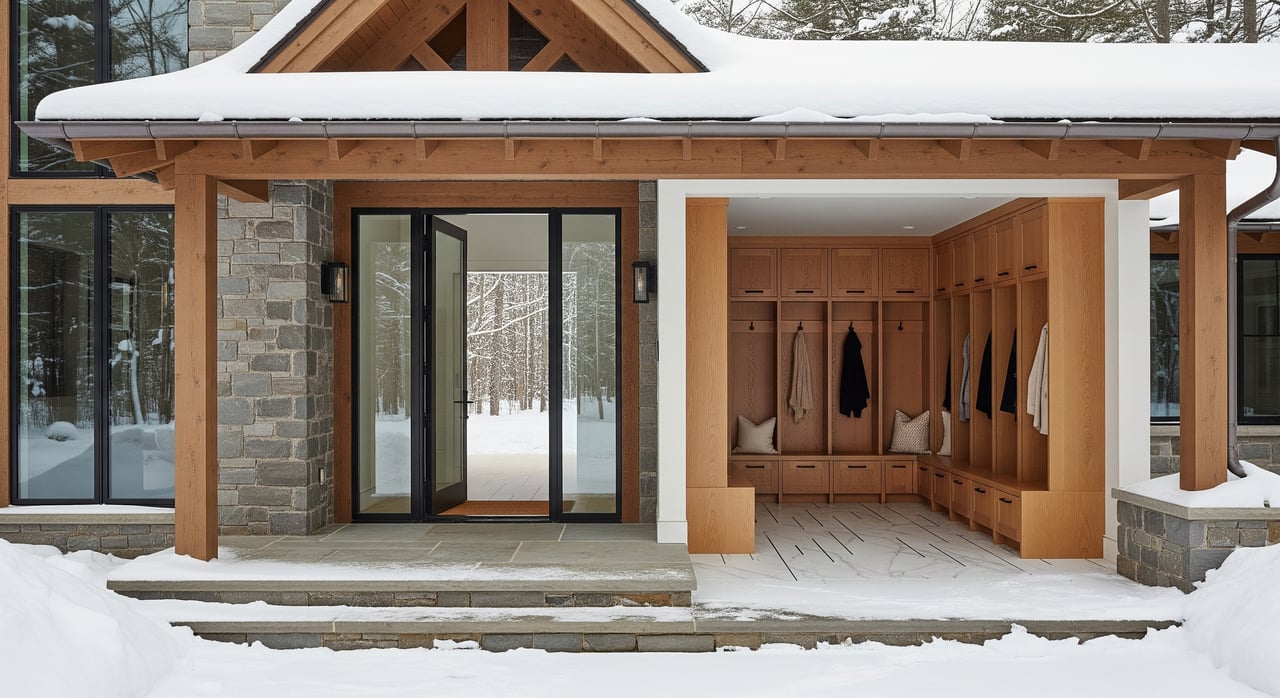
Choose a vestibule or mudroom
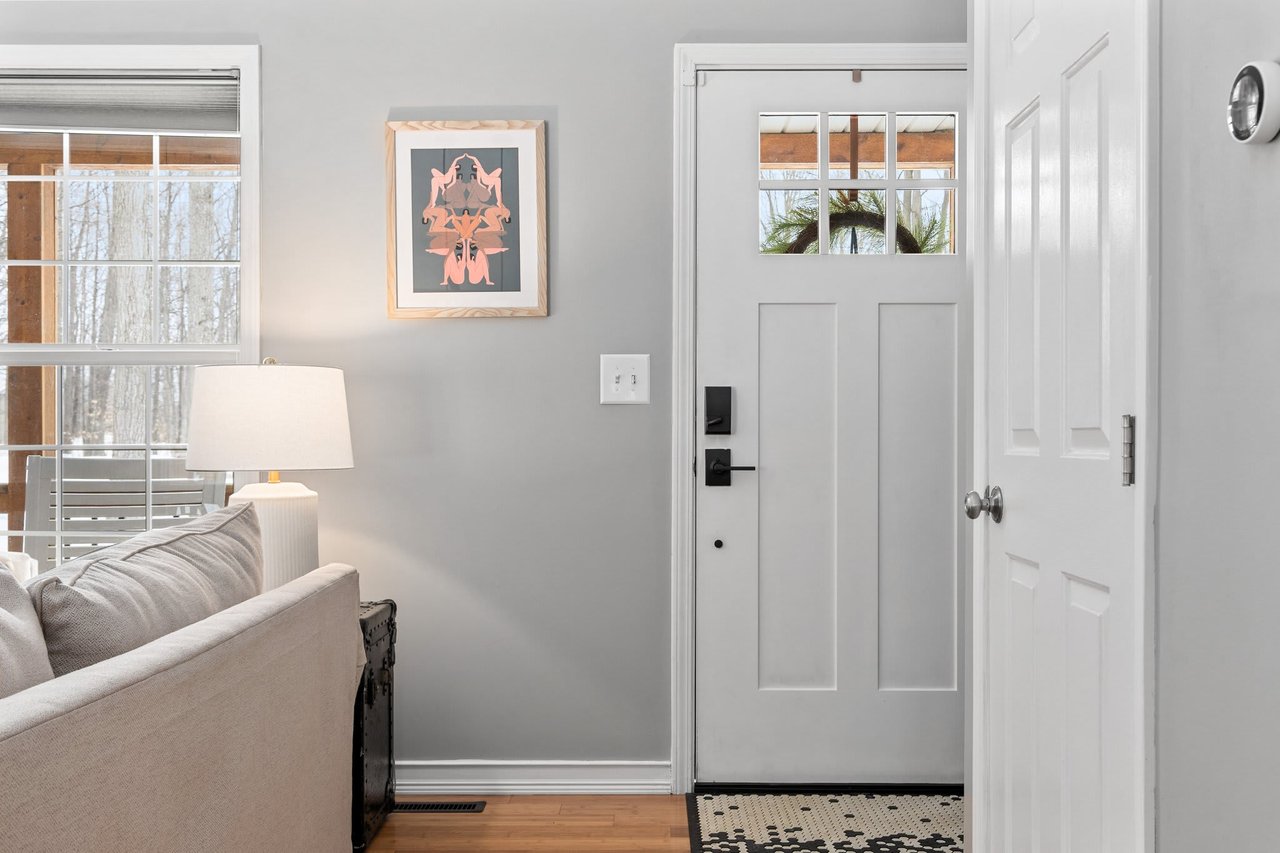
A vestibule creates a small airlock with two doors. It cuts drafts and heat loss, and it gives you space to shed snow before entering the house. Research shows vestibules reduce air infiltration, especially at frequently used doors, which saves energy in cold climates (PNNL modeling of vestibules). If a true vestibule is not practical, a covered porch paired with a dedicated mudroom is a strong alternative.
Design tips:
- Size the space for a bench, boot tray, and closet so doors can close comfortably.
- Keep finishes durable and easy to clean.
- If heated, keep the vestibule temperate rather than at living room levels.
Add cover and smart roof lines
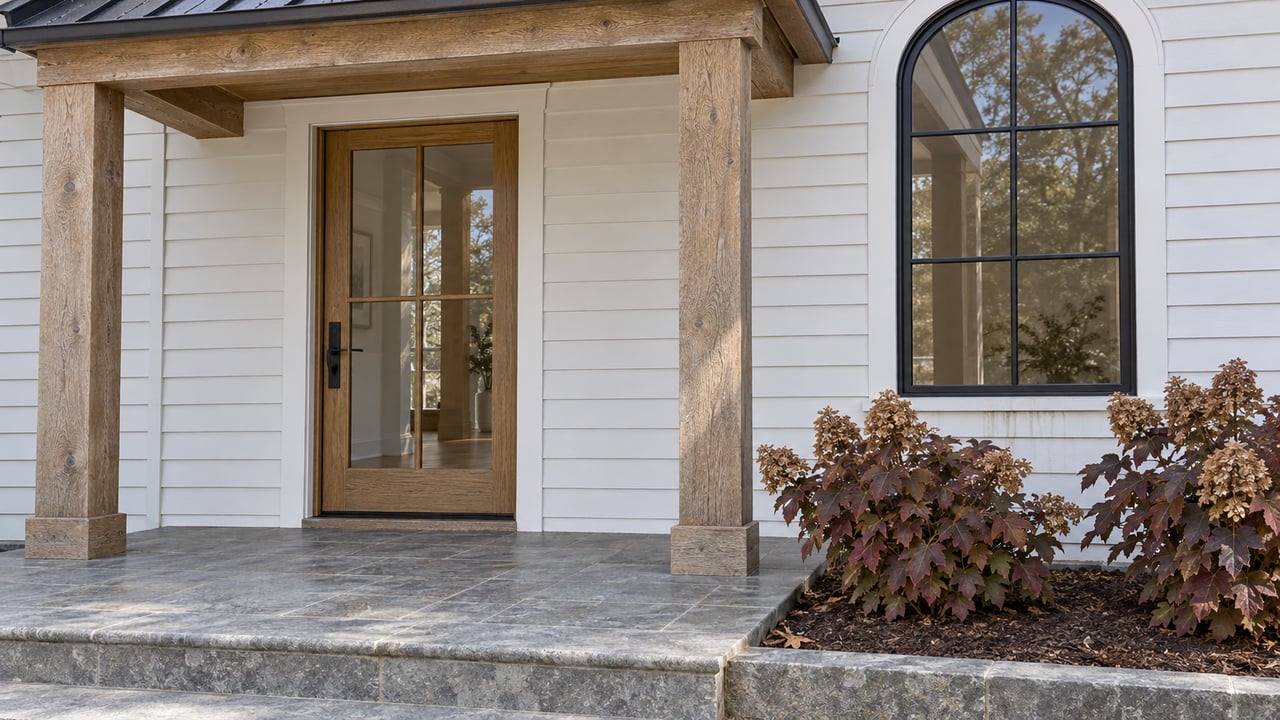
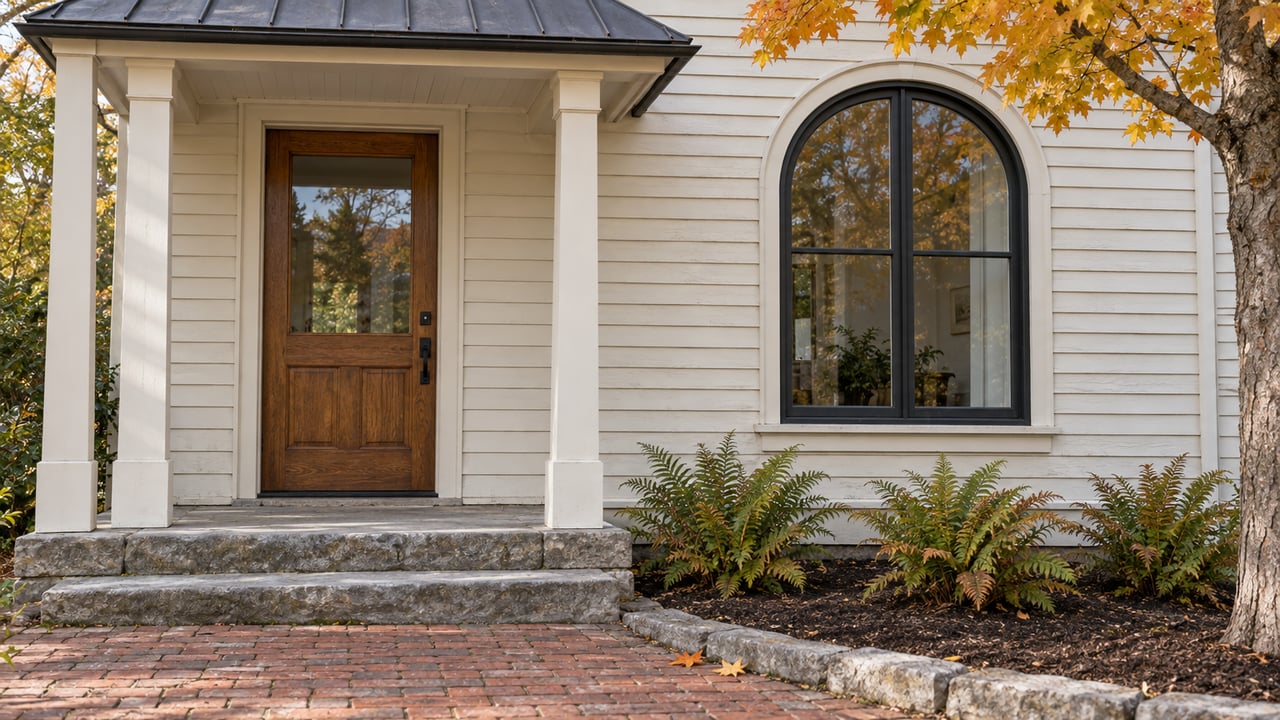
A covered entry keeps snow off thresholds and reduces ice at the door. Even a modest overhang protects the landing and makes shoveling easier. Plan roof lines so sliding snow does not dump onto steps.
Safer steps and approach
Use low, beveled thresholds and landings that drain away from the door. Include sturdy handrails and bright lighting. Plan where shoveled or plowed snow will go so it does not block sightlines or drainage. If you expect to modify a driveway or work near the road, check Antrim County Road Commission permits.
Materials that stand up to slush
Durable, waterproof flooring in the entry or mudroom pays off all winter. Porcelain or dense ceramic tile, waterproof luxury vinyl, and well-sealed stone handle water, salt, and grit better than solid hardwood. For product considerations and maintenance tips, see this entryway flooring overview. Pair surfaces with a tough outdoor scraper mat and an absorbent indoor mat for multi-step trapping.
Slip resistance you can trust
Select finishes and mats with verified slip resistance. Manufacturer data on DCOF or other lab tests can help you compare options. ADA guidance emphasizes stable, firm, and slip-resistant walking surfaces, which is a useful benchmark for entries that get wet and snowy (ADA floor surface guidance).
Warmth and snow melt options
Heated solutions range from simple plug-in entrance mats to radiant floors under tile. A warm mudroom floor speeds drying and boosts comfort. If you add electrical products, confirm outdoor ratings where needed and GFCI protection for safety.
Keep water moving and ice off
Good grading and sealed, sloped landings keep meltwater away from your door and foundation. Maintain gutters and downspouts so they do not discharge onto walkways. To reduce ice dams at the eaves, focus on attic air sealing, insulation, and balanced ventilation, and use roof raking only as a short-term aid. Michigan’s guide to preventing roof ice dams explains the basics.
Be mindful with deicers. Michigan agencies recommend shovel first, scatter salt sparingly, sweep up excess, and switch to alternatives in very low temps to protect plants and waterways. Learn more about the environmental impacts and best practices from the state’s update on smart salt use.
What buyers should look for
- A true vestibule or a functional mudroom with seating, storage, and durable flooring.
- A covered entry with safe, well-lit steps and handrails.
- Thresholds and landings that are level, sealed, and sloped to drain.
- Clean, functional gutters and downspouts that move water away from walkways.
- Attic insulation and ventilation that help prevent ice dams, plus no interior stains near eaves.
- Any heated mats or radiant floors with clear service records and safety devices.
Smart seller upgrades that add value
- Add or enclose a small vestibule, or expand the mudroom.
- Upgrade to waterproof, slip-resistant entry flooring and a two-mat system.
- Improve attic air sealing and insulation to limit ice dam risk.
- Refresh exterior lighting, handrails, and landing drainage.
- Document permits, warranties, and maintenance for any mechanical or electrical systems.
Permits and frost depth in Antrim County
If you plan a porch or enclosed vestibule with permanent supports, Michigan code requires frost-protected footings, typically 42 inches below grade (state code reference). Always confirm permit needs with local officials. For county contacts and building permit information, start with these Antrim County permit resources. For new or altered driveways, apply through the Road Commission permit page.
Ready to find winter-smart homes?
If you want a home that works with northern Michigan weather, not against it, you are in the right place. We help you spot the details that matter, from vestibules and flooring to drainage and attic performance. Reach out to Traverse City Real Estate to tour listings that fit your life and your winter.
FAQs
How much snow does Antrim County get each year?
- Snow varies across the county due to lake-effect and elevation, with totals changing by neighborhood and year. Check local station histories for the most relevant picture.
What flooring holds up best in a mudroom?
- Porcelain tile, dense ceramic tile, and waterproof luxury vinyl stand up well to water, salt, and grit, especially when paired with a scraper mat outside and an absorbent mat inside.
Do vestibules really save energy in winter?
- Yes. A small airlock with two doors reduces cold air infiltration at busy entries, which helps lower heat loss and improves comfort.
How can I prevent ice dams near my entry?
- Focus on attic air sealing, adequate insulation, and balanced ventilation. Use roof raking as a short-term step and keep gutters clean so meltwater can drain.
Are heated mats worth it for entry steps?
- Portable heated mats can be a simple add-on for icy landings. If you install any electrical product, confirm outdoor ratings and use GFCI protection.
Do I need a permit to add a covered porch?
- If the porch has permanent supports or a foundation, you will likely need a building permit and frost-protected footings. Always confirm requirements with local officials before you start.