Grand Traverse County's new septic rule sounds like the kind of thing you skim past in a title report. It only touches one number: 300 feet. But that single measurement is now the difference between a waterfront closing that moves on schedule and one that stalls in October while a seller scrambles to book an inspector. Eight months into enforcement, with fall closings stacking up across the county's lakes and rivers, that line has turned out to matter a lot more than its size suggests.
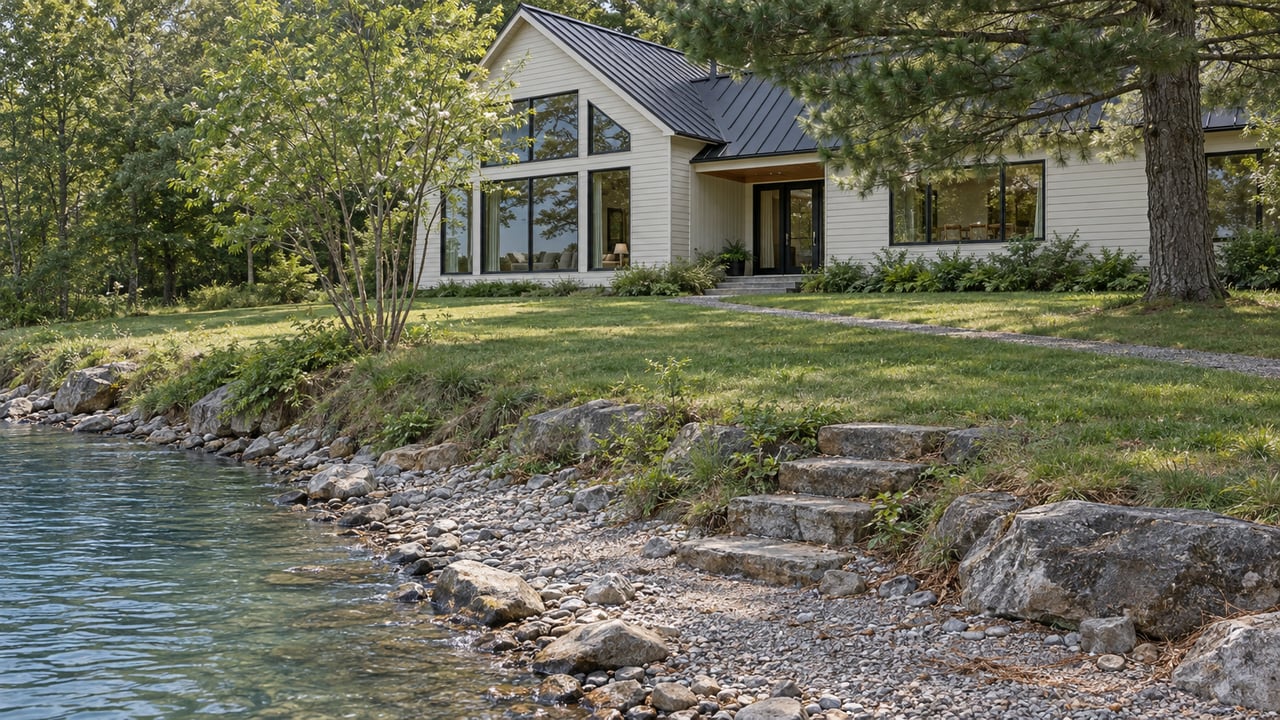
Here is the mechanism. On May 21, 2025, the Grand Traverse County Board of Commissioners unanimously adopted a Time-of-Transfer regulation for septic and well systems. It took effect January 1, 2026. Any home with a well or septic system located within 300 feet of surface water now needs a certified evaluation before the sale can close. Step outside that 300 feet and the county rule doesn't apply at all. That's the whole trigger, and it's also the whole story, because it means this ordinance was written specifically around the property type this county is known for: the cottage on Long Lake, the cabin on the Boardman River, the year-round home on East Bay. Inland buyers barely notice the rule exists. Waterfront sellers are living inside it right now, whether they've checked or not.
Where the Line Actually Falls
The Grand Traverse County's regulation defines surface water broadly, covering lakes, streams, rivers, and even wetlands that "retains water for a duration of six months or more." That's a wider net than most sellers assume. A seasonal wetland at the back of a property can trigger the same requirement as frontage on Grand Traverse Bay, as long as it holds water long enough to qualify.
Before listing, the county's own Tax Parcel Map Viewer lets an owner turn on a Time-of-Transfer layer and see whether a specific parcel falls inside the 300-foot zone. That step takes a few minutes and answers the question with more certainty than eyeballing a property line from the yard. Waiting until an offer is already signed to find out is where the timeline problems start.
Why So Many Systems Fail Their First Real Test
County officials have estimated that roughly 25,000 residences in Grand Traverse County run on septic systems rather than municipal sewer. A county-commissioned review found the average system studied was 28 years old, and about 45 percent hadn't been pumped in the last five years. None of that is unusual for a region built around seasonal cottages that changed hands within families for decades without a formal inspection ever entering the picture.
That history is exactly why the Time-of-Transfer evaluation catches people off guard. A system that has quietly worked for thirty years without complaint has often never been tested against a real inspection standard. It just hasn't been asked to prove anything yet. The evaluation asks.
One part of the county already knows this pattern well. Long Lake Township adopted its own point-of-sale septic ordinance back in 2008, nearly two decades before the countywide rule arrived. Homeowners there have been living with certified inspections at every sale for years. The rest of the county is only now catching up to what one township already normalized.
What Gets Checked, and What It Costs
A certified Time-of-Transfer evaluation in Grand Traverse County typically includes a tank inspection, a drainfield assessment, a check of isolation distances from the well and surface water, and a water quality test for nitrates and bacteria. Waterfront properties often need additional scope, such as a dye test or hydraulic load test, because of the proximity to the lake or river the rule exists to protect.
| Within 300 feet of surface water (property has a well or septic system) | Beyond 300 feet | |
|---|---|---|
| County evaluation required | Yes | No |
| Typical all-in cost | Close to $865, including the water test and health department review fee | Not applicable |
| Report validity | 36 months | Not applicable |
| Turnaround for evaluation and permit issuance | Up to 30 days, according to Grand Traverse County | Not applicable |
That 30-day turnaround is the part that quietly reshapes a closing calendar. A seller who orders the evaluation the week an offer comes in is asking a buyer's lender, moving date, or rate lock to absorb a month of runway that wasn't part of the original plan. Order it before listing, and the same process becomes a selling point instead of a scramble.
The 36-month validity window is another timing detail to check. A property that was evaluated for a listing attempt in 2023 that didn't sell may already be sitting on an expired report by the time it comes back on the market this fall. Sellers who assume an old evaluation still counts are often the ones who discover, mid-transaction, that they need to start the process over.
In a Traverse Ticker report, County Board Chair Rob Hentschel described the intent behind the rule's narrow scope:
"We don't want to hold up real estate transactions any more than we need to."
The 300-foot boundary is the practical result of that goal. Applying the rule to all roughly 2,000 annual property transfers in the county would have overwhelmed the certified inspector pool. Narrowing it to waterfront parcels kept the program workable while still targeting the properties where a failing system does the most environmental damage.
Grand Traverse Isn't Alone, But It Isn't the Same Everywhere
Leelanau and Benzie counties already enforce similar Time-of-Transfer rules for waterfront properties. That can create a false sense of consistency for anyone comparing a listing on one side of Grand Traverse Bay against a property in Leelanau County a few miles away. Each county runs its own health department, its own fee schedule, and its own evaluation process. The details may differ, even for a buyer who is actively cross-shopping waterfront in both counties this fall. Anyone comparing properties across that boundary should check the requirements in each county.
What This Means If You're Listing or Buying This Fall
If you're preparing to list a lake or river home in Grand Traverse County, the ordinance rewards getting ahead of it rather than reacting to it. Check the parcel against the county's Time-of-Transfer map before you set a listing date. If a previous evaluation exists, check its date against the 36-month window rather than assuming it still counts. Budget for the roughly $865 cost and the up to 30-day timeline as part of your pre-listing checklist, not as something to handle after an offer arrives.
For buyers, the practical read is simpler: if a waterfront listing doesn't already have a current Time-of-Transfer evaluation attached, ask about it early. A seller who has already completed the process has removed one of the few variables that can genuinely delay a fall closing on the water.
Frequently Asked Questions
Does every home in Grand Traverse County need this evaluation? No. The requirement applies only to properties with a well or septic system located within 300 feet of surface water as defined by the county ordinance. Homes farther inland aren't subject to the county mandate.
When is the transfer inspection required? For properties covered by the ordinance, the evaluation is required before the sale or transfer closes.
What should I know about neighboring counties' rules? Leelanau and Benzie counties already enforce similar Time-of-Transfer rules for waterfront properties.
If you're weighing a fall listing on the water, or comparing waterfront options across Grand Traverse, Leelanau, and Antrim counties, this kind of timing detail is exactly where a local closing calendar gets built or broken. Traverse City Real Estate can help you check a parcel, time the evaluation correctly, and set a closing date that already accounts for it. Schedule a Consultation.
This article is general information, not legal, tax or financial advice. Consult a qualified professional about your situation.