"Subject to an easement for access to [the lake] and for recreational purposes described separately."
That sentence, or one nearly identical to it, sits in the chain of title for thousands of parcels across Michigan's inland lake country, Antrim County's included. A Michigan Court of Appeals opinion built around almost this exact clause turned on a question that has nothing to do with square footage, finish level, or even lake frontage footage: does the right to cross someone else's land to reach the water also give you the right to put a dock in it? The court said no. That distinction, buried in a recorded deed rather than a listing photo, is the real variable behind two of the widest price gaps on Torch Lake, Elk Lake, and the rest of the Elk River Chain of Lakes.
The word doing the pricing work
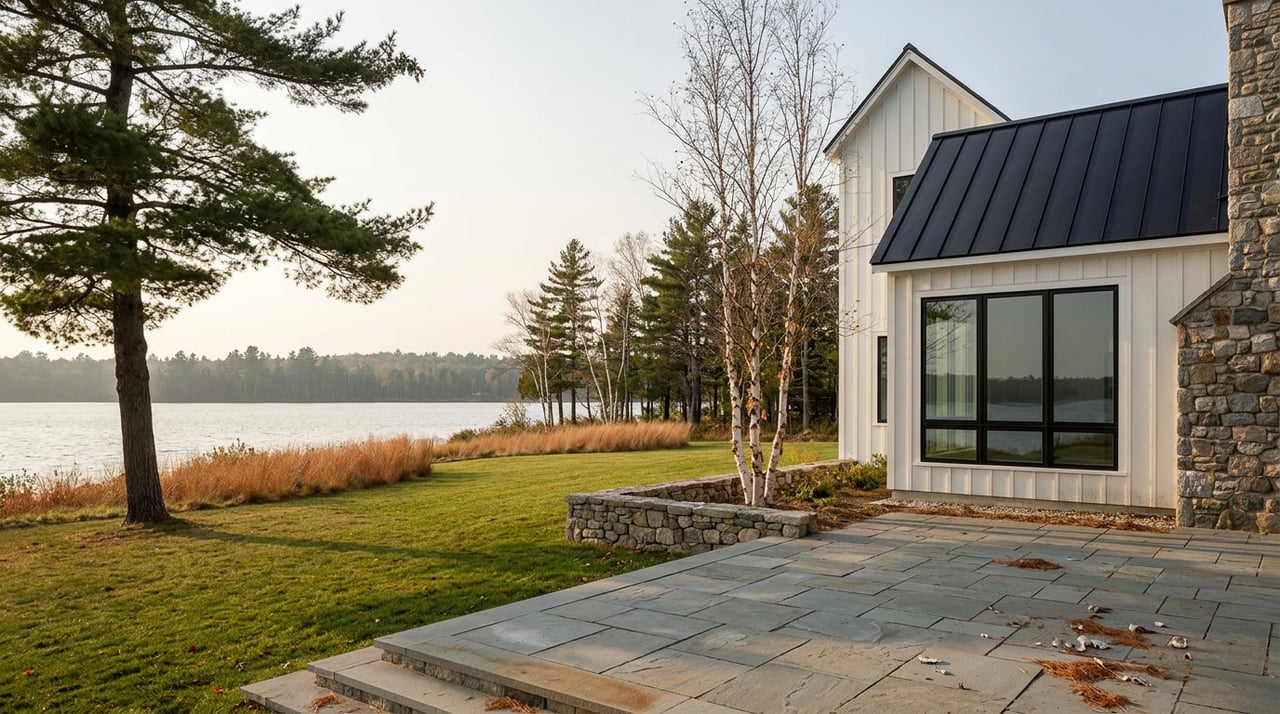
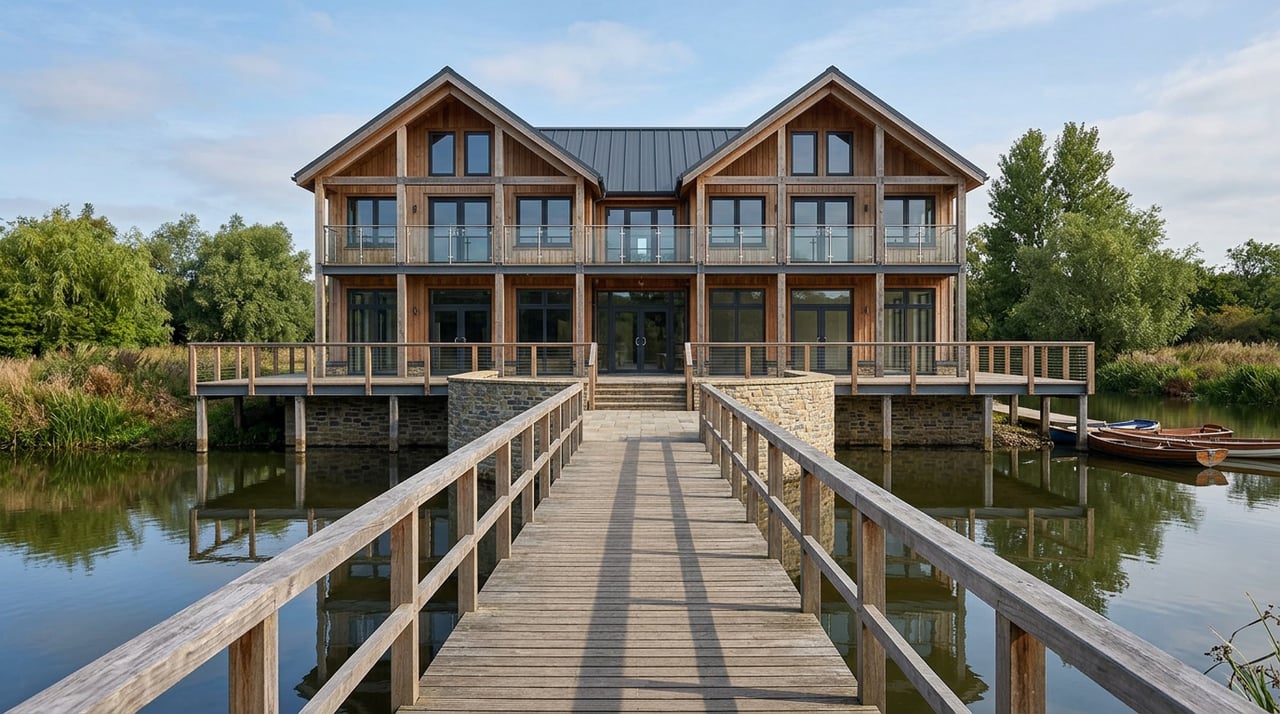
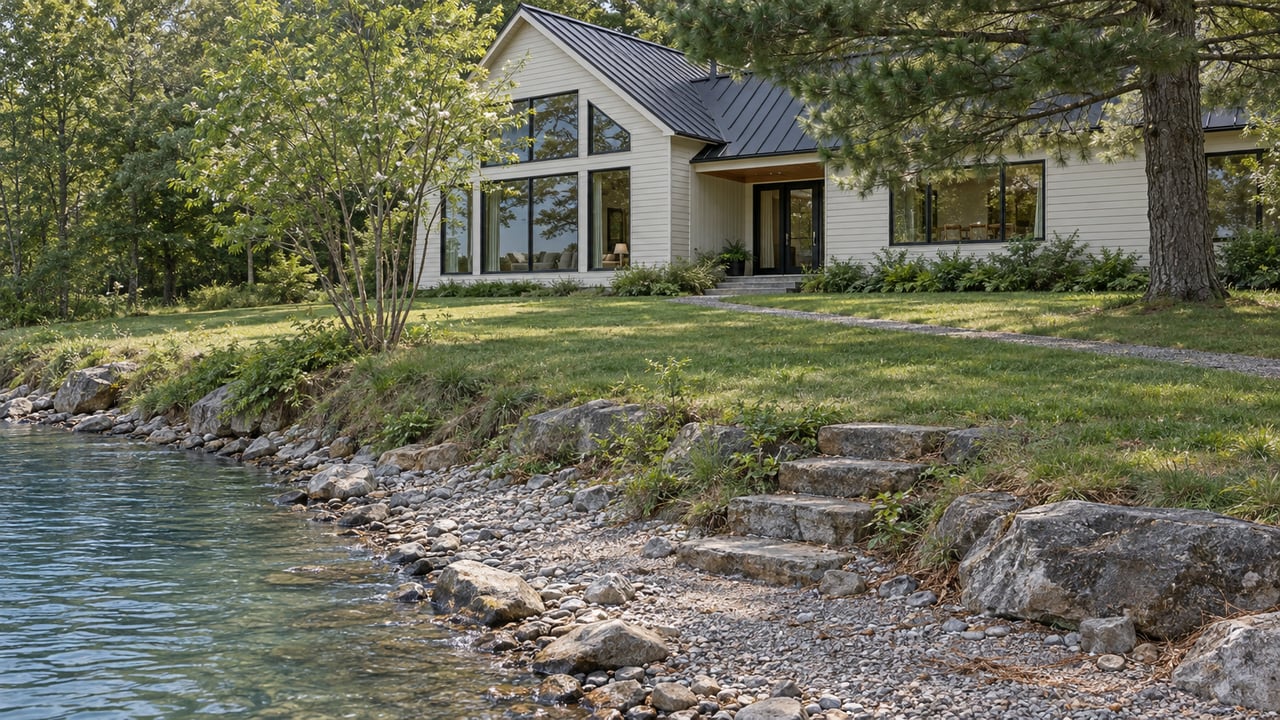
Waterfront home prices on Torch Lake run from roughly $1.2 million to over $5 million as of 2026, while homes marketed as having deeded access or shared association frontage start around $500,000. That is not a gap explained by house size. It is explained by what the word "access" is legally allowed to mean.
Real estate professionals working Leelanau, Antrim, and Grand Traverse counties describe the same pattern from lake to lake: a spread of $300,000 to $700,000 between a property with true frontage and one marketed as deeded or shared access on the same body of water, even when the structures are comparable. On Torch Lake specifically, true private frontage with exclusive shoreline and dock rights commands 40 percent or more above comparable water-access properties, according to figures published in mid-2026. Two listings can sit on the same lake, in the same price conversation, and be fundamentally different products.
Why the same shoreline produces two kinds of owner
Michigan property law draws a hard line most buyers never hear about until they are already under contract. It is sometimes called the touching rule. To hold riparian rights, meaning the right to install a dock, moor a boat, and use the water in front of your property, your land generally has to physically meet the water's edge. If a road, a strip of land, or an easement separates your lot from the shoreline, you typically do not hold riparian rights, even if you have a recorded right to walk across that strip and put your feet in the lake.
There is one notable exception. Lots separated from the water only by a dedicated road, walkway, or park easement, sometimes called "first tier" lots, are usually still treated as riparian, because the lot owner's fee interest is generally understood to extend to the water subject to that easement. It is a narrow exception, and it depends entirely on how the original plat was drawn and worded, which is exactly why a title search matters more here than almost anywhere else in a real estate transaction.
Everyone else, the true backlot owner whose parcel never touches the lake at any point, gets whatever the easement document says and nothing more. Courts have been consistent that granting someone the right to cross land for access does not, by itself, grant them the traditionally exclusive riparian rights of dockage and mooring. The original riparian owner can choose to extend some of those rights through the easement language, but the default assumption runs the other way.
What Michigan courts have actually done with that line
This is not theoretical. In one Michigan Court of Appeals case, a family had used a strip of land between two properties to reach a lake for more than thirty years before a dispute reached the courts. The court found they had established a valid easement for access, but ruled that decades of use did not convert that access into riparian rights, because the family had never established that they or previous owners had also exercised dock or mooring rights for the required period. No boat in the water for fifteen years means no argument that the easement ever carried that right.
A separate dispute involving a lake association followed the same logic from the other direction. A backlot owner with a recorded easement for "ingress, egress, and lake access" tried to use that language to justify swimming, wading, and mooring a boat near a frontage owner's beach. The court sided with the frontage owner, ruling that an access easement is not a license to use someone else's bottomlands and shoreline the way a riparian owner would. The plaintiff was even barred from parking his boat trailer on the easement itself, because the recorded purpose was passage, not staging.
The throughline in both cases is the same. Whoever wrote the easement decades ago, often for a plat that predates modern lake tourism entirely, decided what that strip of paper actually conveys. Nothing that happens after closing, including years of friendly use, reliably expands it.
Title insurance will not catch this for you
Buyers on the Chain of Lakes tend to assume that a clean title commitment means a clean bill of health on water rights. It does not. Title insurance verifies that you are getting good and marketable title to what the legal description actually covers, and it will flag recorded easements and deed restrictions. What it almost never does is warrant or guarantee that a property carries riparian rights at all. The insurance company is confirming you own what the paper says you own. It is not confirming that what the paper says amounts to a dock.
That gap is why attorneys who work Michigan waterfront transactions treat the deed and any recorded easement language as a separate review from the standard title commitment, not a substitute for it.
The buyer pool question
There is a second layer specific to Torch Lake worth understanding before comparing a frontage listing against an access listing. Torch Lake Township's zoning ordinance, Section 2.24, has barred short-term rentals in its R-1, R-2, and R-3 residential districts since July 15, 2014. If part of the appeal of a lower-priced, access-only property is the idea of offsetting the purchase with weekly rental income, that model does not work inside Torch Lake Township's residential zones regardless of whether the property has a dock. Neighboring townships including Banks, Forest Home, and Helena do not currently carry a dedicated short-term rental ordinance of their own, so the rules genuinely change at a township line most buyers never think to check.
Combine the two frictions and the buyer pool for a deeded-access property narrows twice over. It is a smaller pool because it lacks a private dock, and in Torch Lake Township it is a smaller pool again because it cannot legally chase rental income. What remains, on that lake specifically, tends to be people who intend to use the property themselves rather than underwrite it as an asset.
What the tiers actually look like
| Tier | What the deed actually grants | What it typically prices at on Torch Lake, 2026 |
|---|---|---|
| True riparian frontage | Land touches the lake. Owner can install and maintain a dock, moor a boat, use the shoreline directly. | $1.2M to over $5M |
| Association-owned frontage | An HOA or association holds title to a separate shoreline parcel; members get seasonal use rights defined by the association's governing documents, not automatic personal dock rights. | Often bundled into near-lake pricing starting around $500K, with annual dues that vary widely by association |
| Deeded easement access | A recorded right to cross a specific point to reach the water. Dock and mooring rights depend entirely on the exact language of that easement. | Starting around $500K |
| Proximity or view only | No recorded water access of any kind. | Priced as inland property, without a lake premium |
The dollar figures move with the market. The legal hierarchy underneath them does not.
What to ask before you waive contingencies
A due diligence list for this specific issue looks different from a standard home inspection checklist:
- Request the full title commitment and read every recorded easement in the chain, not just the summary page.
- Ask specifically whether the easement or association document mentions dockage, mooring, or watercraft, not just "access" or "recreational purposes."
- If an association owns the frontage, ask for at least three years of meeting minutes and financials, since dues and the condition of the shared parcel vary enormously between associations.
- Confirm which township the parcel sits in and whether that township has its own short-term rental ordinance, since Chain of Lakes rules change at township and village lines.
- If dock rights exist, ask whether any dock, hoist, or shoreline work has already gone through Michigan's inland lakes and streams permitting process, since new or modified structures typically require their own state review.
None of this is a reason to avoid a deeded-access property. For the right buyer, and there clearly is one given how much of this inventory sells, association and easement access delivers real lake life at a real discount. The risk is not the product. It is buying it while believing it is the other one.
Frequently Asked Questions
Does an association's governing documents automatically include dock rights for members? Not automatically. Michigan courts have held that whether backlot or association members can install a dock depends on the specific language of the plat dedication or association documents. Some plats clearly grant dock and mooring rights to all lot owners. Others grant only a right of way to the water's edge. The two look identical on a map and read completely differently on paper.
Can riparian rights be added to a property after closing? Generally, no. Michigan law does not allow full riparian rights to be severed from a riparian parcel and transferred wholesale to a non-riparian backlot owner after the fact. The original riparian owner can grant specific rights through a new easement, but that requires the frontage owner's cooperation and a new recorded document, not a request after the sale is done.
Does a wider easement or a longer history of use expand what it covers? Not reliably. Courts have ruled that decades of quiet, uncontested use of an access easement does not by itself expand its scope to include riparian rights like dockage, unless the specific conduct required to establish that broader right was independently proven for the statutory period.
Comparing two Chain of Lakes listings on price alone tells you what the number is, not what it buys. If you are weighing a frontage property against a deeded-access one and want the deed language reviewed before you write an offer, Traverse City Real Estate can walk through the title commitment and easement wording with you before you're the one testing what it covers.