Here is the version of this story nobody tells you before you write the offer: the unit can be flawless and the deal can still stall for eight weeks, because the thing your lender is underwriting isn't your kitchen or your view of the bay. It's the building. Specifically, it's a set of ratios buried in paperwork you'll never see unless you ask for it, and those ratios don't care how good your credit is.
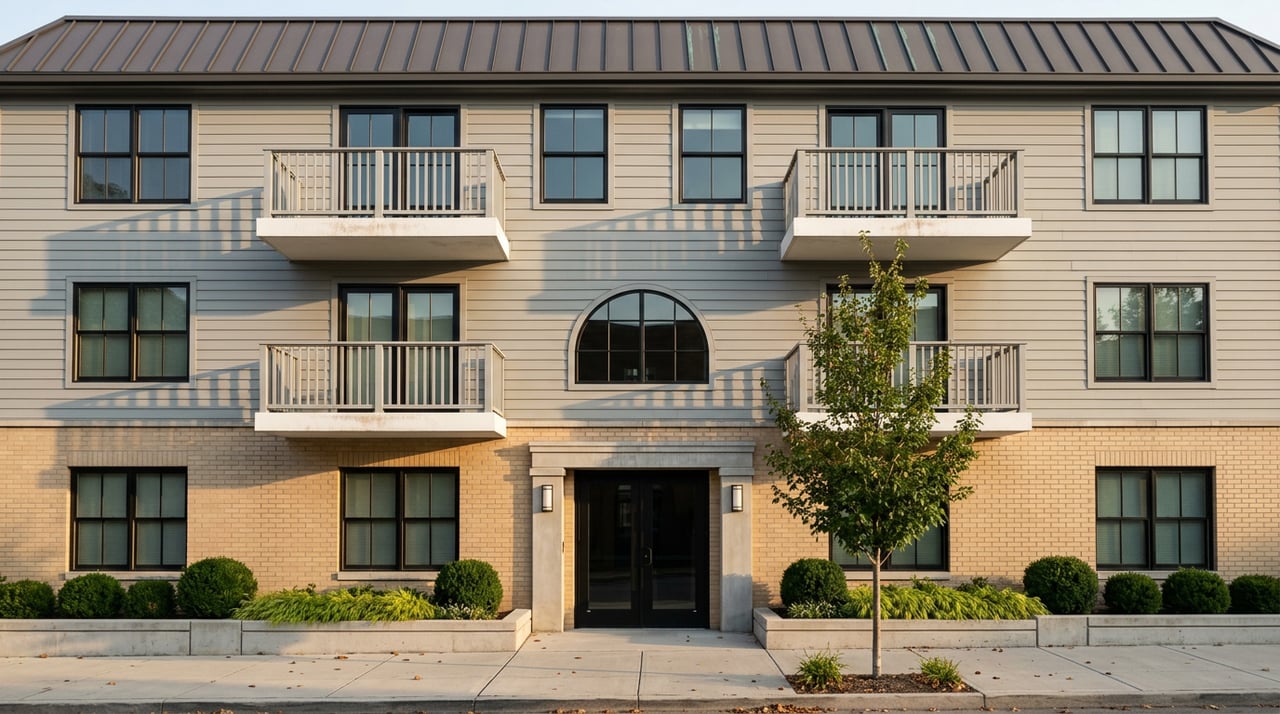
Downtown Traverse City has spent the last few years adding exactly the kind of condo inventory that makes this friction sharper than it used to be. Buildings like Slabtown Flats, Randolph's Acqua, and newer luxury projects have leaned hard into furnished, turnkey units pitched at second-home buyers and short-term rental investors. That pitch is the selling point. It's also, in a specific and predictable way, the thing that can slow down or block a buyer who wants to finance with an FHA or VA loan instead of paying cash.
The Unit Passes the Inspection. The Building Might Not Pass Underwriting.
Every condo purchase involves two separate approvals happening at once. One is about you: your credit, your income, your down payment. The other is about the building, and it's the one buyers routinely forget exists until their loan officer brings it up mid-escrow.
Conventional lenders run a standard condo questionnaire. FHA loans go further and require what's called project-level approval, meaning the entire association has to clear a checklist before any individual unit in it can close with that financing. HUD's own guidance on this, drawn from decades of tracking condominium performance, lays out the mechanics plainly: at least 50 percent of units in the project need to be owner-occupied, with a narrower exception down to 35 percent available only to associations that can document three years of clean financials and low delinquency. The National Association of Realtors says commercial space is capped too, generally in the 35 to 49 percent range depending on the specific waiver.
None of that shows up in the listing photos. It shows up in a project review that a lender either has to complete from scratch or pull from an existing approval on file, and if the building has never been reviewed before, that process alone can push a thirty-day conventional timeline toward ninety days or more.
Turnkey and Furnished Cuts Both Ways
This is where the downtown market's own marketing works against a subset of its buyers. A building sold on rental income potential, with furnished units and short-term rental history baked into the listing, is by definition attracting investor-owners rather than owner-occupants. That's exactly the ratio FHA underwriters are checking.
It isn't hypothetical. The Penthouses at 111 State launched as two full-floor units in Traverse City's first fully electric building, priced at $2.95 million and $3.25 million, aimed squarely at second-home buyers who want a move-in-ready residence with no renovation runway. The Ottaway, a new luxury project from J. Peterson Homes at 424 Front Street, is built around the same pitch: full-floor residences, private elevator access, a shared rooftop, designed for buyers who want lakeshore living without the maintenance of a single-family home. Down at Slabtown Flats at 918 W. Front Street, the ten-condo building mixes penthouse units starting near $595,000 with one-bedroom units priced closer to $265,000, and its own marketing leans on the building's fit for buyers who want an annual escape they can also rent out when they're not using it.
None of these buildings are doing anything wrong. They're responding to real demand from a real buyer profile. But a building that leans this way on purpose is a building where a cash buyer or a conventional borrower will move fast, and an FHA borrower needs to ask a very specific question before writing an offer: has this association ever completed a project approval, and if not, is the ownership mix even close to qualifying?
The Timeline Nobody Puts on the Listing
| Path to closing | Typical timeline | What actually slows it down |
|---|---|---|
| Cash | 7 to 21 days | Title work and estoppel turnaround, assuming no surprises |
| Conventional financing | 30 to 45 days | Standard lender questionnaire on the association |
| FHA or VA financing | 45 to 90-plus days | Full project review of occupancy, reserves, and commercial space |
| Assessment or litigation surfaces mid-escrow | Add 1 to 4-plus weeks | Negotiating credits, prorations, or an escrow holdback |
The gap between the fastest and slowest row on that table reflects both the financing path and the building's review requirements.
How Michigan Condo Liens Rank Against Mortgages
There's one piece of good news buried in Michigan's condo law, and it's worth knowing before any of the above starts to feel alarming. According to Rickellaw, Michigan gives condominium associations lien rights against unpaid assessments, but those liens sit junior to a first mortgage. There's no "super-lien" priority the way some states allow.
Michigan also doesn't have a single statewide HOA law the way some states do. Associations here operate under the state's Nonprofit Corporation Act and whatever their own declaration and bylaws say, which is exactly why those documents matter more in Michigan than they might somewhere with a more standardized state framework. Two buildings a block apart downtown can have meaningfully different rules on assessments, rentals, and enforcement, and the only way to know which rules apply to the unit you're considering is to read that specific building's paperwork.
The Four Documents Worth Requesting Before You Write the Offer
None of this requires a lawyer on day one. It requires knowing what to ask for before you're locked into a timeline.
- The reserve study. This tells you whether the association is actually saving for the roof, the elevator, and the exterior work, or whether dues are being kept artificially low while those costs pile up unfunded.
- Board meeting minutes from the last 12 to 36 months. Special assessments rarely appear out of nowhere. They get discussed at board meetings first, sometimes for months, before owners see a bill.
- The master insurance summary. You need to know where the association's coverage ends and your own unit policy has to begin, because that line varies by declaration and getting it wrong leaves a gap nobody notices until there's a claim.
- The estoppel or status certificate. This is the closing-week document that confirms current dues, any past-due balances, pending assessments, and violations tied to the specific unit. Sellers should order it early because, as the Rexera guide explains, it's a legally binding snapshot the buyer and lender both rely on, and a late request is one of the most common reasons a closing date slips.
A building's reserve study tells you more about your future assessment risk than the view from the balcony ever will.
What This Means If You're Comparing Buildings Downtown
If you're weighing a unit at Slabtown Flats against something at The Ottaway or a resale in an older downtown building, the finishes and the floor plan are the easy part to compare. The harder, more useful comparison is asking each listing agent the same three questions: has this association completed an FHA or VA project approval, what does the reserve study show, and has there been a special assessment in the last five years. A newer building marketed heavily toward investors and second-home buyers may simply not have the owner-occupancy ratio FHA wants yet, which isn't a defect, but it is a fact that changes your financing math before you fall in love with the unit.
For sellers in these same buildings, the read is just as direct. An association that keeps its documents organized and its reserve study current is doing future sellers a favor, because the next buyer's financing timeline depends on paperwork the seller doesn't personally control but absolutely benefits from being clean.
Frequently Asked Questions
Does a low owner-occupancy ratio mean a building is a bad investment? Not necessarily. It means FHA financing may be harder to use for that specific building, which narrows the buyer pool for future resales to cash buyers and conventional borrowers. That's a financing constraint, not a judgment on the property itself.
Can a seller do anything before listing to speed this timeline up? Yes. Ordering the estoppel certificate early, making sure the reserve study is current, and confirming whether the building has an existing FHA approval on file all remove steps a buyer's lender would otherwise have to chase mid-escrow.
Does paying cash make all of this irrelevant? It removes the project-review timeline, but it doesn't remove the value of reading the reserve study and assessment history. A cash buyer still inherits the building's maintenance trajectory and dues structure even without a lender checking it for them.
If you're comparing specific downtown buildings and want to know which ones actually have financing on their side, Traverse City Real Estate can walk through the paperwork with you before you write an offer, not after. Schedule a consultation and we'll help you read the building the way an underwriter will.
This article is general information, not legal, tax or financial advice. Consult a qualified professional about your situation.