Wondering why one lakefront home in Antrim County attracts strong interest quickly while another sits for months? In a market like Elk Rapids and the surrounding 49629 area, pricing is rarely as simple as looking at a countywide average and picking a number. If you are getting ready to sell, understanding how buyers evaluate waterfront can help you price with more confidence and avoid leaving money or time on the table. Let’s dive in.
Why lakefront pricing is different
Lakefront property in Antrim County does not behave like a standard residential market. According to Redfin’s Antrim County housing market data, the county had a median sale price of $348,000 in March 2026, while Redfin’s 49629 market page showed a median sale price of $395,000 and 72 days on market. At the same time, the research report notes that Realtor.com’s 49629 overview showed a median listing price of $573,500 with 156 median days on market.
That gap matters. It suggests some sellers enter the market above where recent closed sales support value, which can lead to extra time on market without guaranteeing a better result. For waterfront homes, the best pricing strategy is usually the one supported by actual buyer behavior on that specific lake or shoreline.
Antrim County is a multi-lake market
Not all waterfront in Antrim County is interchangeable. The Michigan DNR’s Antrim County inland lake maps show just how many distinct water bodies shape this market, including Birch Lake, Clam Lake, Elk Lake, Intermediate Lake, Lake Bellaire, Skegemog Lake, and Torch Lake.
That variety affects value in a big way. Buyers do not view every parcel the same, even when two homes are both described as “on the water.” In practice, same-lake sales often tell you much more than county averages because each waterbody has its own mix of access, setting, shoreline character, and buyer demand.
Frontage type changes everything
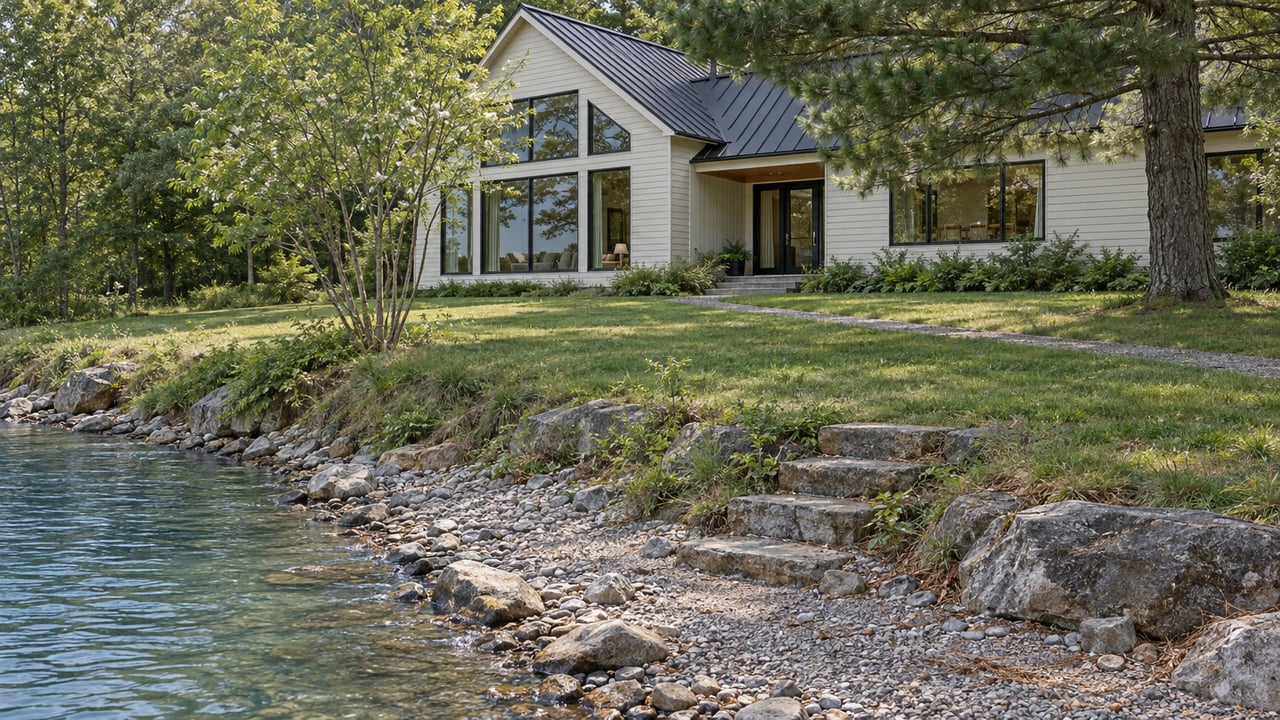
One of the biggest pricing mistakes sellers make is grouping all “lake properties” together. A true waterfront parcel, a home with deeded access, a canal-front home, and a house across the street from the lake are not the same product in the eyes of buyers.
The local examples in the research report make that clear. A Birch Lake home described as being across the street from the lake sold for $200,000, while a Birch Lake waterfront home sold for $650,000. Other recent examples ranged from a Bass Lake waterfront home that sold for $1.05 million to a Lake Michigan estate with more than 350 feet of shoreline that sold for $3.0 million.
The lesson is simple: true frontage usually commands a very different price than near-water or access-only property. If your home has direct shoreline, that should be measured and compared carefully. If it does not, your pricing should reflect that distinction clearly from day one.
Views and water quality matter
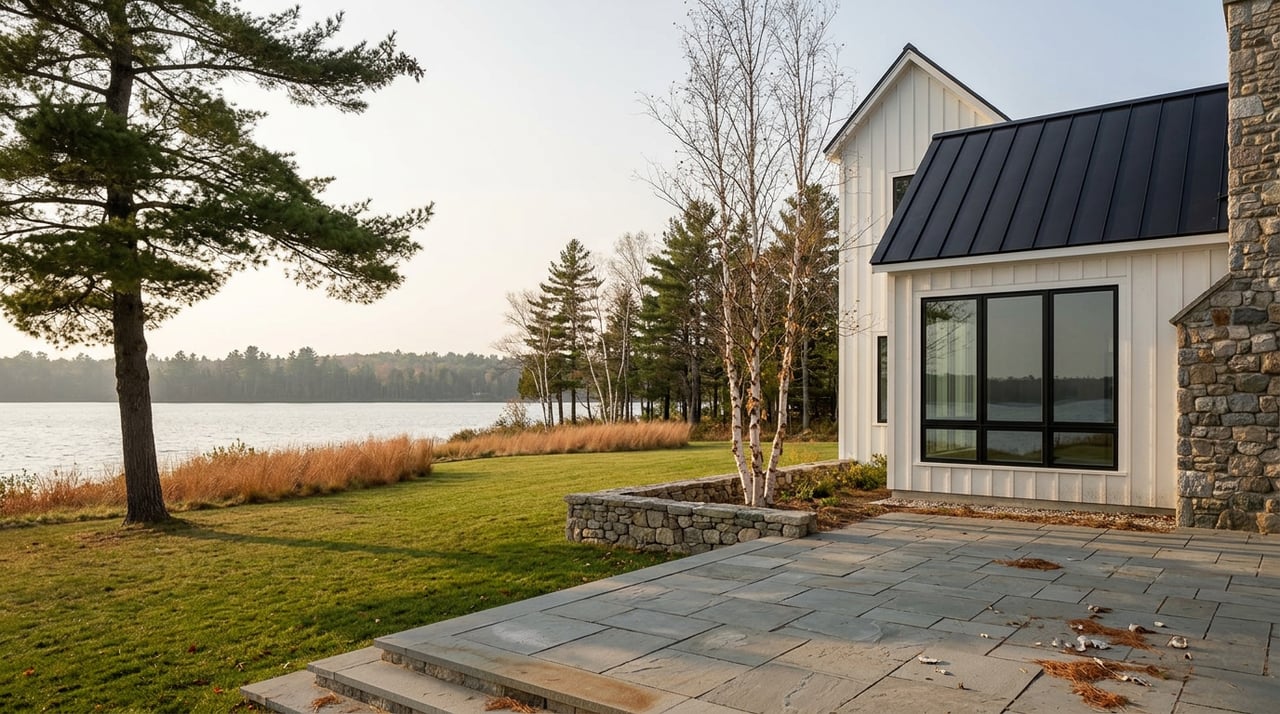
Square footage matters, but it is not the whole story with waterfront. Buyers are often paying for the setting as much as the structure. View corridor, sunset exposure, privacy, shoreline clarity, and elevation can all influence what a buyer is willing to pay.
That is not just a local opinion. Freddie Mac research on water views found that water views carried an 11% premium in its study. The research report also notes that home values near lakes tend to rise with better water quality, with the strongest effect closest to the shoreline.
For sellers, this means two homes with similar size can still price very differently. A property with broad open-water views and a clean, usable shoreline may justify stronger pricing than a larger home with a limited view or a more challenging lot.
Docks and boatability can add value
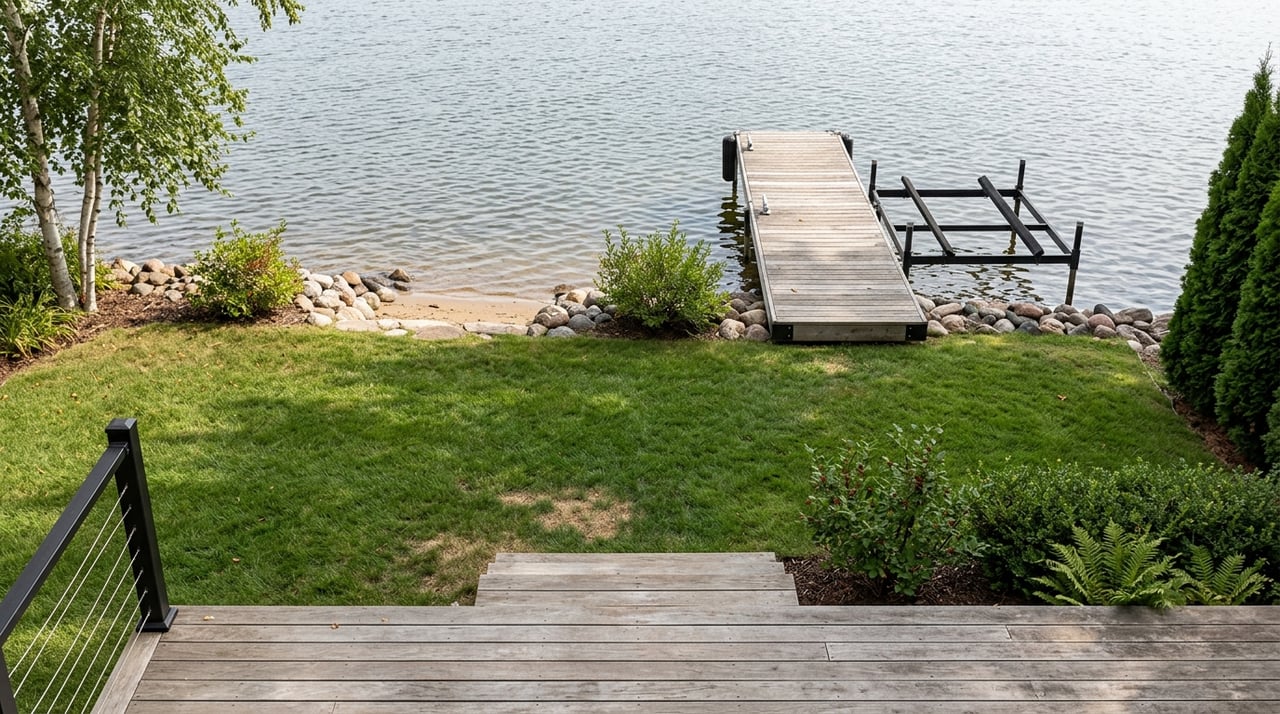
In many Antrim County waterfront sales, buyers are not just purchasing a home. They are purchasing access to the water and the ability to enjoy it easily. That is why dock usability, boating access, and shoreline conditions can have a real impact on pricing.
According to Michigan EGLE’s dock guidance, seasonal private noncommercial docks and boat hoists generally do not require a permit if they are removed at the end of the season and do not unreasonably interfere with navigation or water flow. Permanent docks or boat hoists on inland lakes and streams do require a permit.
That distinction matters because a dock only adds full value when it is usable and appropriate for the site. Buyers also look at whether the shoreline supports easy entry, whether water depth works for their boat, and whether the property offers a practical waterfront experience, not just a waterfront address.
Shoreline rules affect value too
Waterfront pricing is also shaped by what you can and cannot do with the shoreline. Michigan’s riparian rights guidance explains that riparian rights can include access, dockage, and certain water use rights. It also explains that the ordinary high-water mark helps define the boundary between upland and bottomland on inland lakes and streams.
This is especially important in Antrim County because not all shoreline is regulated the same way. Great Lakes shorelands follow a different legal and practical framework than inland lakes, so a Lake Michigan or Grand Traverse Bay property may require a different pricing conversation than a parcel on Birch Lake or Torch Lake. If your property has unique shoreline conditions, they should be part of the pricing analysis from the start.
Use same-lake comps first
The strongest pricing strategy for a waterfront home is a lake-specific one. When possible, the best comparables are sales on the same lake or waterbody with similar frontage length, view, lot elevation, shoreline character, access, and home condition.
That approach also aligns with industry valuation standards. Freddie Mac’s UAD guidance treats waterfront as a distinct location factor, which reinforces the idea that waterfront should be analyzed as its own market characteristic rather than as a generic upgrade.
If there are no recent same-lake sales, adjustments need to be explained carefully. A good pricing strategy should show why one property is a valid comp and where it differs. That kind of transparency helps sellers understand the logic behind the list price instead of relying on broad averages or guesswork.
When a CMA is enough, and when an appraisal helps
Most waterfront pricing should start with a broker market analysis or comparative market analysis. The State of Michigan’s appraiser guidance distinguishes between an appraisal prepared by a licensed appraiser and a market analysis prepared by a broker or salesperson to help estimate a potential listing price.
For many sellers, a thoughtful CMA is the right first step. It can organize same-lake sales, frontage differences, dock features, and local market timing into a clear pricing strategy. If the property is especially high-value, estate-related, or difficult to benchmark because of unusual features, a formal appraisal may also make sense.
Signs your lakefront home may be overpriced
Even in a desirable market, pricing too high can work against you. Here are a few common warning signs:
- You are comparing your home to active listings instead of recent sold properties
- Your price is based on countywide averages rather than same-lake data
- You are giving full waterfront value to a view-only or across-the-street property
- You are counting on a dock or shoreline feature that may be limited by regulations
- You are hoping extra time on market will automatically produce a higher sale price
In 49629, the research report shows a meaningful difference between list-price expectations and recent closed-sale numbers. That makes careful pricing even more important if your goal is to attract qualified buyers early.
A smart pricing plan for Antrim County sellers
If you want to price your lakefront property well, focus on the variables buyers actually care about. A strong plan usually includes:
- Same-lake or same-waterbody sold comparables
- Frontage type and frontage length
- Shoreline usability and water access
- View quality and lot setting
- Dock or boat hoist status
- Waterbody-specific demand and recent market timing
- Clear explanation of how the asking price was built
This kind of pricing strategy is especially important in Antrim County because the spread between properties can be so wide. A near-lake home, an inland-lake waterfront property, and a large Lake Michigan estate may all exist within the same ZIP code, but they do not belong in the same pricing bucket.
Price for the market you have
The right list price is not always the highest number you can imagine. More often, it is the number best supported by how buyers are actually behaving on that lake, in that season, with that type of shoreline and access.
When your pricing is grounded in the right data, you give your home a better chance to stand out early and compete effectively. If you are thinking about selling waterfront property in Antrim County or the 49629 area, Traverse City Real Estate can help you build a pricing strategy based on local market behavior, clear communication, and a full-service approach to presenting your home at its best.
FAQs
How should you price a lakefront home in Antrim County?
- Start with same-lake sold comparables and adjust for frontage type, view quality, shoreline usability, dock access, and overall condition rather than relying only on countywide averages.
Does a dock add value to waterfront property in 49629?
- Usually yes, especially if the dock is usable and appropriate for the site, but its value depends on access, water depth, and whether it fits applicable EGLE rules.
Why do lakefront home prices vary so much across Antrim County?
- Prices vary because Antrim County includes many different lakes and shorelines, and buyers value differences in access, setting, prestige, shoreline character, and boating potential.
Is a lake view the same as true waterfront in Elk Rapids?
- No. A lake view or across-the-street location can still carry value, but true frontage typically commands a much stronger premium.
When should you get an appraisal for a lakefront property?
- A formal appraisal may be helpful when a property is unusually complex, high-value, estate-related, or difficult to compare because of unique waterfront features.